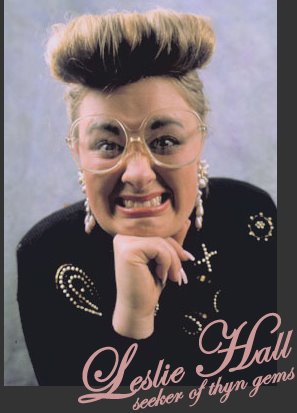
Rita. Not Rita. (Valentino.)
I wear clothes and I have what amounts to a personal style by default, but Fashion is not my forte. I appreciate it, don't really follow it, and tend to enjoy it as a simultaneously evolving and degrading network of signifiers where colors and styles refer to other things: images, cultural ideas and stereotypes, history, and other fashions and styles. This description probably seems needlessly cumbersome with the added advantage of being vague, but if we accept that "fashions" begin with high fashion--not just classic couture but the various big designers--and then disseminate over time out into cheaper, lower-quality, and less sophisticated hybrid permutations, then it makes a kind of sense. At least I hope it does. Other styles and fashions have subcultural, ethnic, and class markers, and don't necessarily depend on high design, though they may borrow from (or be inspired by) it from time to time. In fact, frequently the converse is often true and high fashion finds its inspiration in any number of style traditions or cultures, reshaping them, ironizing them, and otherwise converting the naive, banal, traditional, or declasse into "couture." Simultaneously, clothing and "looks"--let's say sensibilities--come in and out of "fashion" as designers work against, extend, or reject what came out in previous seasons; on top of that, it takes a year or two, usually more, for ideas and styles to work their way down to the Gap and K-Mart. This is why fashion is in a constant state of evolution and degradation as every season brings a new series of lines that are absorbed into the culture and then filter out--or better, metastasize--into other markets. So, while high fashion appears newly each season and thus redraws the field to some degree for the immediate present and the near future, the popular, diluted, and fragmented ideas from two to five years ago are finding their way onto shelves at the same time.
The fashion system I've been elaborating, or belaboring, is an undeniably reductive one. There is no monolithic "Fashion" handed down from the rarefied heights of the couture houses and the high fashion industry that decomposes into "bad" fashion as it is taken up--too late--by other, cheaper, markets. But some things--and, yes, I'm going to use "things"--hit hard each season, and others don't. The stuff that hits finds its way through specific, overlapping communicating media, most visibly, celebrities (media stars, politicians, the very wealthy, and events such as awards shows and First Lady appearances). The value of these "things" comes first from contradictory impulses where the people who can afford these items want either what everyone else is wearing ("everyone" here being an incredibly tiny and affluent percentage of the general population) or what no one is wearing. Also, specific "hot" designers receive special attention in the press--imagine a world where film actors were not asked "who" they are wearing as they file into the latest awards spectacle. The news and entertainment media's obsessive projection of this information into the world has fostered a most widespread awareness of trends and designers.
What interests me is the circulation of aesthetics, images, sensibilities, styles, periods, and philosophies in fashion; and, yes, I am focusing on the way couture becomes culture and decomposes in the world of the markets until it is slowly replaced by other decomposing trends.
There are other times to discuss the other "group-related" domains of fashion that are based on the utility or aesthetic of ethnic, class, professional traditions which consequently change very slowly, glacially in comparison (an easy to spot example in the fast-paced "Fashion" industry are epaulets, which were borrowed from a military context, and reappear now and then on dress jackets, trenchcoats, and windbreakers). But out and among these other domains, exists the milieu of "everyone else" in a clothing-sense--we could call this a style without style because the main concerns are practicality and thrift. We speak here of the graveyard of fashion, where all trends end up and eventually die. They dwell here as a fossil record of the last few years of fashion, and you can read these trends fairly easily when you look at color, cut, ornament, and so on. The trajectory I'm describing is neatly summarized in The Devil Wears Prada when the Streep/Anna Wintour character explains that the reason Anne Hathaway's Gap sweater is the particular color of blue that it is derives from a conversation had five years previous in the very room where they stand.
Most people are fairly thoughtless about their clothing and generally go for the demure, standard, and everyday (which is to say the unnoticable)--this describes the legions of citizens, women, in the Midwest, for one example, whose choices in, and awareness of, fashion is quite limited. The fact that they really don't value fashion at all is the reason they can be said to have no style (whatever fossilized trends can be found in what they wear), because a real style is chosen, and what these people are wearing was chosen for them, as though the clothing industry were some monstrous mother dressing her fashion-hapless children. If clothing choice is a way of choosing a kind of identity, then the clothing Midwestern moms wear expresses no identity, because there is nothing individual about it.
For the individual, fashion must be used; style must be chosen. It is a system of play that sends a message of who you think you are or who you want others to think you are--and sometimes that decision changes on a daily basis. The truly savvy--and the kind of people designers watch for ideas--wear whatever they want. If everyone aspired to this level of play and sophistication, fashion might be no fun at all, because the thing that sets the wealthy and the savvy apart from everyone else when it comes to fashion is knowledge, access, difference, attention, and invention. Those with no style lack all these qualities.
SIDEBAR/ENDBAR: Fashion can be read in other ways, of course: for the ways it represents a larger cultural view of gender (flamboyance and flash are still largely reserved for the female of the species), for the ways it incorporates war as fashion, the ways it reiterates earlier trends in the name of "retro," and so on and on; because the turnover is so fast the domain is great and yet strangely finite. This reading, this semiotic, of fashion requires a longer view than what I mean to describe here. I speak not of signs, of ideas that have specific cultural referents, but of signifiers of images. A semiotic, which concerns meaning, is different from a genealogy, and the genealogical is what this discursis circulates about. Fashion is a history of surfaces. Fashion is the first guard, the avant-gard, the armor, of the self. Those who put on their armor every day know the value of this. Moreover and furthermore, this whole setup I've outlined is a useful metaphor for the way other systems work, like history, hairstyles, and genre television: the infectious movement of Fashion reveals the way ideas move generally in culture. And you thought Fashion was just stupid and useless. Silly, reader.
So, I told you that story to tell you this one. Congratulations on getting this far.
Through a series of circumstances I prefer to keep anonymous, I recently acquired an haute couture item that belonged to one Mary McCarthy. Now, I don't know what is more bizarre: that I have high fashion in my home, or that it was worn by that wonderful and acerbic essayist, critic, and novelist, whom no one knows about anymore.
I gave the piece to Jeph for his birthday, and it has still a pricetag on it, Minnie Pearl-style, from a gallery sale in which the previous owner thought, with advice, it would go for $3,500. Though it didn't sell and was given to me, most generously, I am fairly certain that the price listed is not far off from its "value," which makes it the most expensive, non-appliance, thing I have ever touched, excluding the Rosetta Stone (which is now under glass) and a van Gogh at the National Gallery (which is not). Yet unlike those precious items it lives with me. And not only is it valuable because it is a vintage piece of couture, it has Mary McCarthy's DNA on it. This is exciting. This is dramatic.
Let's discuss the piece for a moment: it is a gorgeous, cream, satin, double-breasted coat, made double-wide to be worn over a ballgown, or some other formal wear for women circa 1958 or so, one that has many, many petticoats. Moreover it was designed by Lanvin, the oldest of the Parisian fashion houses. The oldest. Mind you, it was not made by Lanvin herself, who was long dead by 1958, or her daughter, who was, and still is, also dead. No, this is a coat made by one of the most respected fashion houses in Paris, who take, or took, their heritage very seriously. But the fossils are evident in the make of the thing, in its very large satin-covered buttons, and the way it fits a dress that would never be worn today, outside of California where there is no need to wear overcoats on formal dresses, fabulous or otherwise. If I had a decent picture of it, I'd post one, but for now you'll just have to use your imagination. Instead, I offer these images from the Metropolitan Museum of Art's costume closet of classic Lanvin. Enjoy. [See below.]
UPDATE. I took some crappy pics. It needs cleaning and pressing, but:

But you really need to see the large satin button detail:


And now, for the frocks.

Evening dress, 1939, Jeanne Lanvin (French, 1867–1946) Steel-gray silk taffeta embroidered with metallic sequins and pink beads. Gift of Mrs. Harrison Williams, Lady Mendl, and Mrs. Ector Munn, 1946

Evening ensemble, ca. 1934, Jeanne Lanvin (French, 1867–1946)
Black silk taffeta with metal plaques. Gift of Miriam W. Coletti, 1993
Black silk taffeta with metal plaques. Gift of Miriam W. Coletti, 1993

Evening jacket, 1936–37, Jeanne Lanvin (French, 1867–1946) Silver lamé with black fox trim.
Gift of Mrs. Leon L. Roos, 1966
Gift of Mrs. Leon L. Roos, 1966

Robe de style, 1924–25, Jeanne Lanvin (French, 1867–1946) Ivory and black silk taffeta
trimmed with pink and black silk velvet rosettes. Gift of Mrs. W. R. Grace, 1956
trimmed with pink and black silk velvet rosettes. Gift of Mrs. W. R. Grace, 1956